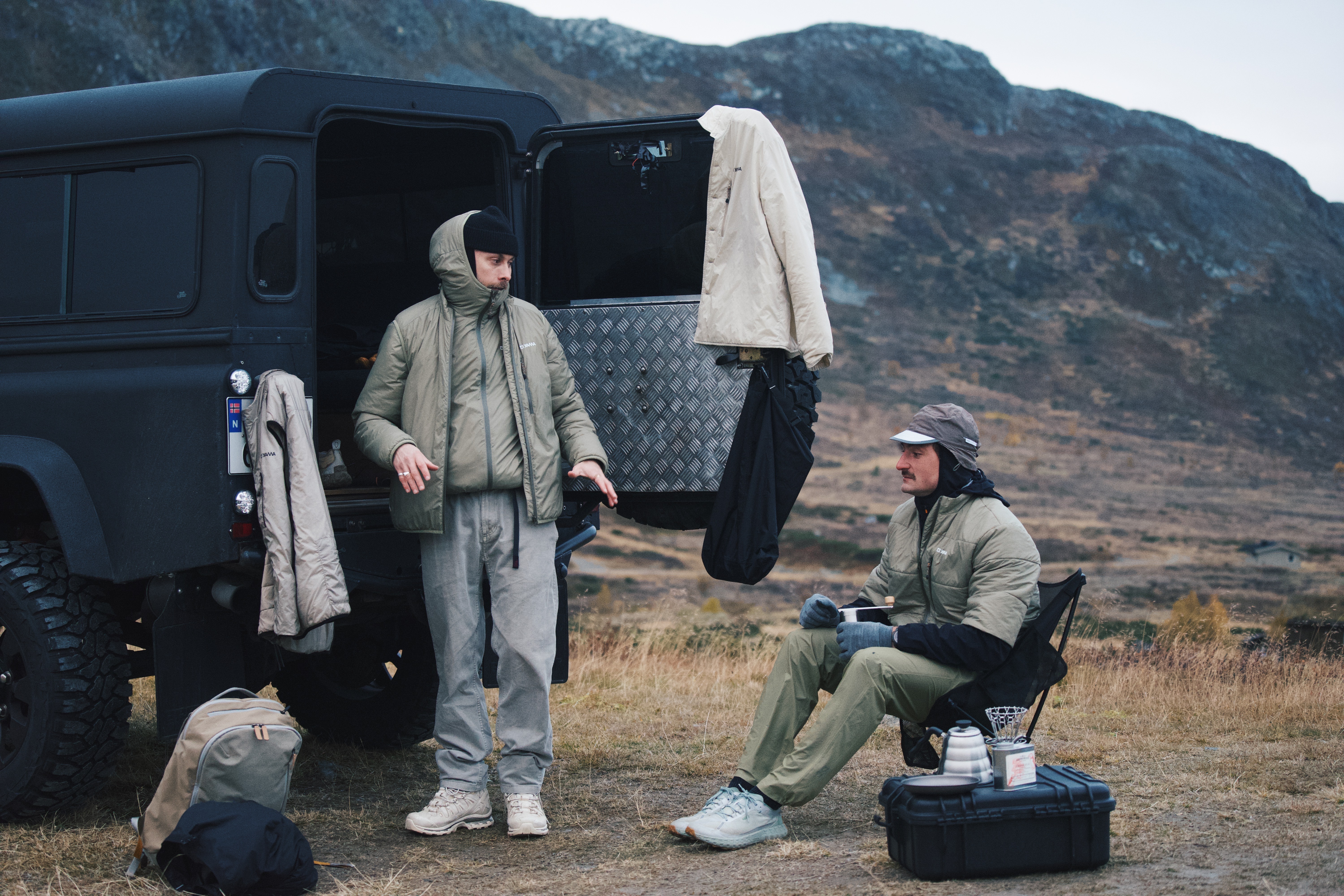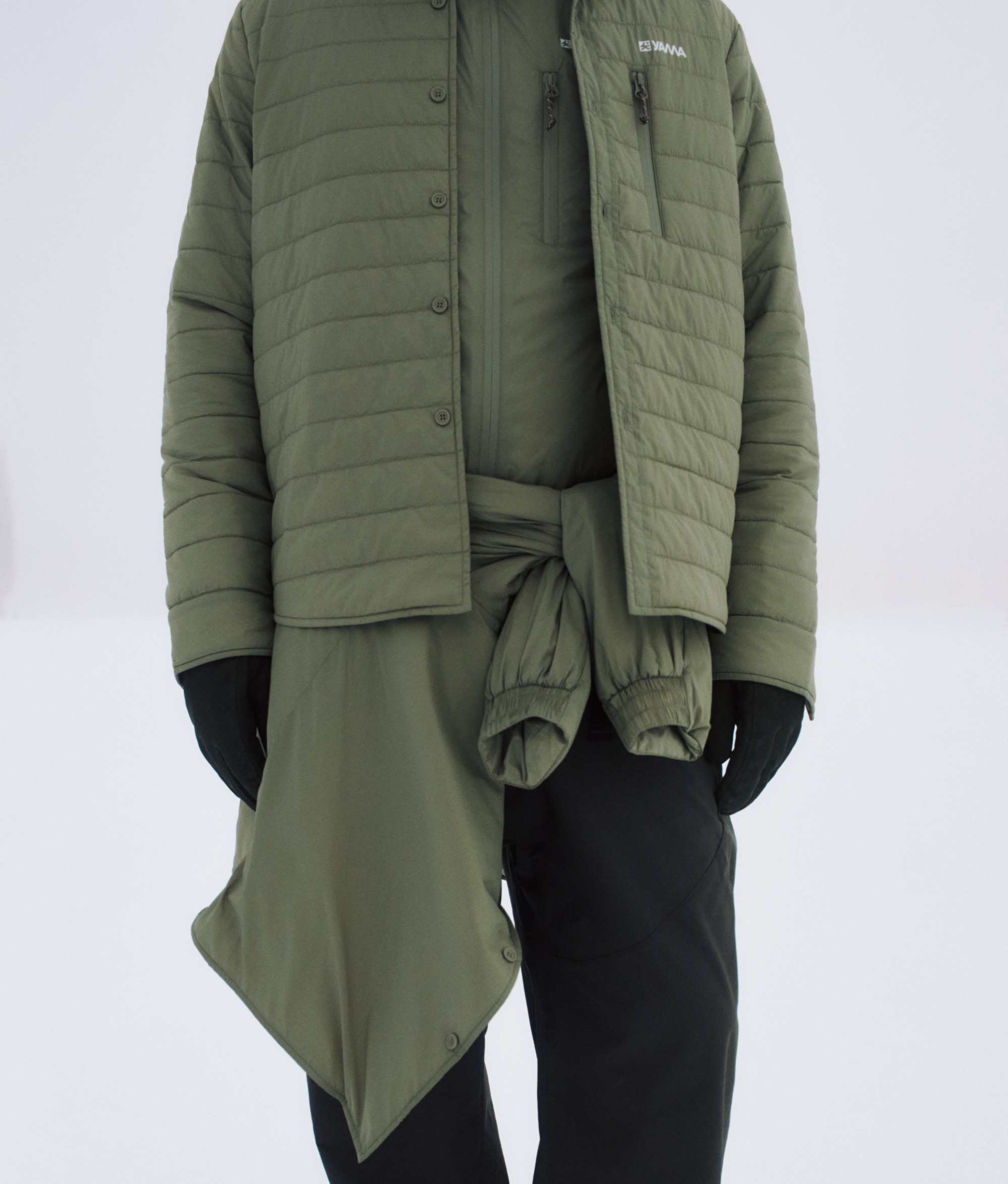
Materials chosen for reprocessing. Construction that allows disassembly. Systems that keep pieces in circulation.
Circularity built in from the start.
Materials for multiple lives
PrimaLoft insulation maintains loft through repeated compression and performs even when damp — essential when garments move between users and conditions. Recycled ripstop sourced from fishing nets resists tearing without adding weight. YKK hardware lasts for years and can be replaced when needed.
Every material choice supports longevity and reprocessing. The circular system depends on materials that perform reliably across multiple owners and repair cycles.
Built for disassembly
Modular construction means components can be replaced individually. Zipper replacement. Elastic renewal. Panel repair or replacement. Seams designed to open and reseal. Trims selected for long-term availability.
Construction methods that enable repair at every stage of the garment's life.


Four pathways after return
Professional assessment using FIKSE and Manufacture Oslo determines the next phase for a garment return.
Resale: cleaned, inspected, and returned to circulation.
Repair: component replacement and seam reinforcement. Restored to working condition.
Redesign: materials reconfigured into new pieces.
Archive: long-term storage for materials awaiting future reprocessing technology.
Each pathway preserves value and extends material life.
Take-Back with Deposit
After 12 months, you can return a Yama garment for assessment. When suitable for further use, you receive a 15-30% deposit toward your next piece.
One garment per year. The piece enters the circular system permanently.
Lifecycle formalised as a designed feature.

Data enabling decisions
Every garment includes a Digital Product Passport accessible via QR code. Material sourcing, production date, and certifications are tracked throughout the product's life.
This data informs assessment decisions. Material composition determines recycling pathways. Construction methods determine repair approaches. Age and use history determine the potential for resale or redesign.
The economics shift over time
Better materials. Modular construction. Repair infrastructure. Circular systems have different cost structures.
Higher initial price. Lower lifetime cost. Fewer purchases. Longer use. Repair instead of replacement.

Photo: Sture Nordhagen
Three years in
A jacket three years old. Zipper replaced once. Cuff reinforced. Shell shows wear. Insulation maintains loft. Everything works.
Worn in. Still functional.
Materials that last. Construction that allows repair. Systems that keep garments in motion.
Circularity as product architecture. Designed for multiple lives.